
Community
How to Evaluate a Public Space: A 15-Point Checklist for Residents and Planners
October 21, 2026
A square can look wonderful in a photograph and feel wrong within thirty seconds of standing in it. The benches face the car park. The only patch of shade sits behind a locked gate. The fountain is dry, and the wind funnels between two buildings so that nobody lingers. None of this shows up in a rendering, and most of it never reaches a consultation form either.
The checklist below turns those impressions into something you can count, compare and defend. Fifteen points, scored as you walk, sit and listen. It works for a small neighbourhood piazza and for a busy civic square, and it takes about forty minutes.
Start With a Score, Not an Opinion
Give each of the fifteen points a score of 0, 1 or 2. Zero means the point is absent or failing, one means it exists but is flawed or unreliable, two means it genuinely works. The maximum is 30, and the total matters less than the pattern — a square that scores well on seating but badly on access and shade is a square for people who already find it easy to get there.
- 24–30: a square that works. Note what makes it work, because good spaces get "improved" into mediocrity more often than you would think.
- 16–23: usable, with two or three specific fixes that would change how long people stay.
- 8–15: a pass-through. People cross it rather than use it.
- 0–7: failing at the basics. Start with access and seating; nothing else will matter until those are sorted.
Score the same square twice on different days before you show the result to anyone. A single visit on a wet Tuesday is not evidence.
The Fifteen Points
Seating and rest
1. Variety of seats. A bench with a back and armrests, a wide ledge, a movable chair and a broad step are four different offers. Count them separately. Someone with a bad knee, someone with a pram and a group of teenagers need different things from a place to sit.
2. Orientation. Seats should face something worth watching — a fountain, a play area, a street with life on it. Benches lined up against a blank wall stay empty in the best weather.
3. Capacity. Count the seats, then compare that figure with what you see at the busiest hour. If people are perching on planters and steps, the square is short of seats whatever the plan says.
Access and movement
4. The whole loop. Walk the step-free route from the nearest bus stop and from the nearest accessible parking space. Not just the entrance: kerbs, joints between paving, slopes, and the distance to a public toilet.
5. Legibility. Could a first-time visitor tell where the exits are without a sign? Blind corners, dark underpasses and ambiguous paving all cost points.
6. Arrival. Long waits at a signalised crossing, or a crossing placed far from where people actually want to walk, discourage the casual visit that keeps a square alive.
Shade, shelter and surface
7. Shade where people sit. Check at the hours the square is used, not only at noon. A tree that shades a bench at nine in the morning may leave it exposed at four.
8. Shelter from wind and rain. Look for corners, colonnades, a canopy over a stop. Squares built on open former industrial land are often windier than the streets around them.
9. Water and surface. A working drinking fountain matters in summer. Note whether the paving glares, holds puddles after rain, or stays hot late into the afternoon.
Noise and air
10. Sound. Sit for fifteen minutes, then write down every sound you can hear and where it comes from: traffic, deliveries, extract fans, a fountain. Note whether there is a corner where a normal conversation is easy.
11. Smell. Bins, drains, idling engines. This is the point most audits skip, and often the first thing people mention when explaining why they avoid a place.
Care and maintenance
12. Condition of the basics. Lights working, bins not overflowing, paving not lifted by roots, planting that survives rather than being replaced every spring.
13. Cleaning rhythm. Visit early on a Monday morning. What is left over from the weekend tells you more about management than any noticeboard.
Use and safety
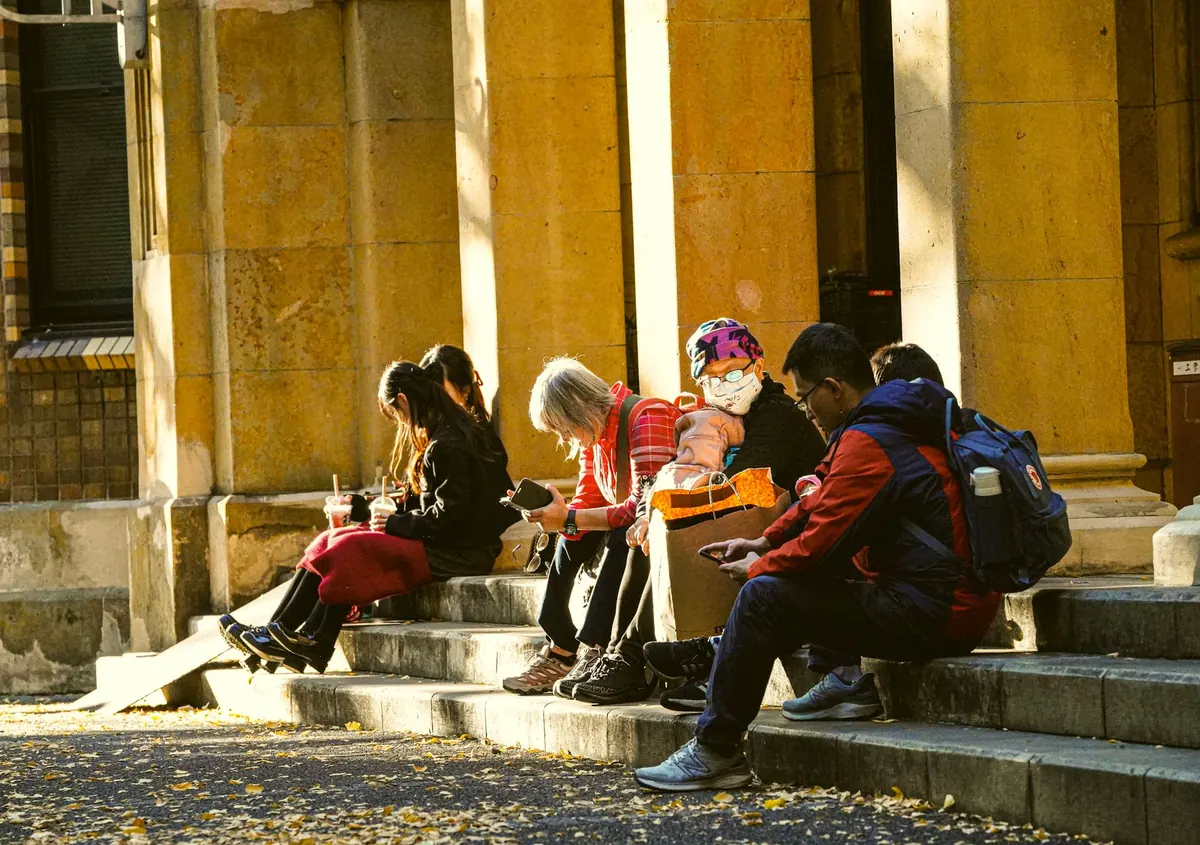
14. Who is here. Note the mix: older people alone, parents with small children, teenagers, people eating lunch, people sleeping rough. A square used by only one group has a problem, even when it looks busy.
15. After dark. Go back in the evening. Working lighting, clear sightlines and whether the square is a through-route or a dead end all change after sunset. If you would not walk through it yourself, write that down plainly.
Walk It Twice, at Different Times
Timing changes everything. A square that feels generous at eleven on a Wednesday can be a wind tunnel at six, or a corridor of delivery vans at eight in the morning. Pick two visits that reflect how the space is really used.
- Choose one weekday and one weekend slot, ideally one quiet hour and one busy one.
- Sit for fifteen uninterrupted minutes in each visit. Standing and looking is not the same as staying.
- Count seats, bins, trees and working lights. Numbers settle arguments later.
- Photograph the same view from the same spot on both visits, plus close-ups of anything broken.
- Write three sentences on the way home, before the impression fades into something tidier.
What to Do With the Results
Keep the write-up to a page. Separate what you observed from what you suggest, because the observations are hard to argue with and the suggestions are where a conversation starts. "Twelve seats for a square that holds sixty people at lunchtime" lands better than "the square needs more seating".
Then be specific about the fix. Three benches facing the fountain, one tree on the sunny side, a crossing moved ten metres closer to the corner. Ask for one or two changes rather than a redesign, and give the responsible body a realistic season to respond. Neighbourhood groups, ward councillors and parks departments all respond better to a short list with photographs than to a general complaint.
If the square is subject to a planning application or a formal consultation, and you are thinking about submitting an objection, check the process and any deadlines with the relevant local authority or a planning professional before relying on the checklist.
Five Ways an Audit Goes Wrong
- Scoring in good weather only, which flatters every square.
- Judging a place by its design rather than by how people use it.
- Visiting alone and generalising from one person's comfort.
- Ignoring the walk to the square, which is where most visits are lost.
- Turning up with a long list of demands instead of two clear asks.
Your First Forty Minutes
Take a printed copy of the fifteen points and a pencil. Arrive on foot, by the route most people would use. Walk the perimeter first, then sit in the middle. Score as you go, and leave the total until the end so the numbers do not steer your attention.
If you only remember one thing, make it this: a public space is judged by whether people stay. Everything on the list — the seats, the shade, the crossing, the bins emptied on Sunday night — is there to make staying easy. Score accordingly, and you will have something worth handing to whoever manages the square.
Photo: Hoàng Minh / Pexels
Related posts
More stories you’ll love reading